
Wood staining
Wood Staining & Sealing
Stain does not hide a surface, it reveals it. The sanding sequence, grain raising and conditioning underneath decide whether finished wood reads deep and even or blotchy and dull.
Prep that shows through the color
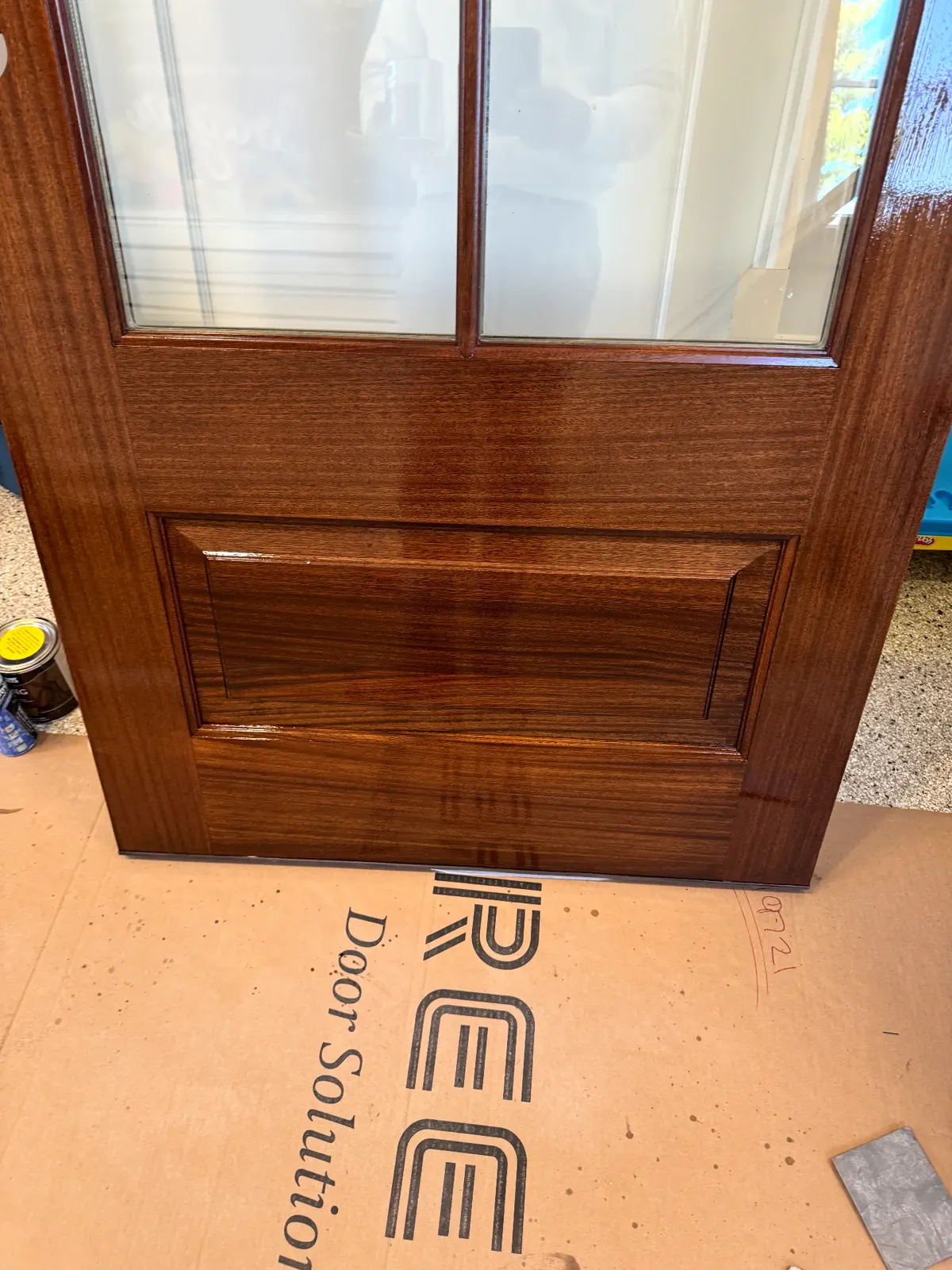
Stain is applied thin, so every scratch, glue smudge and sanding mark in the wood stays visible in the finished piece. We sand through a fixed sequence, raise and knock back the grain with water before color goes on, condition dense or resinous species so they take evenly, and test the color on a hidden board or a scrap from the same stock.
- Sanding sequence carried through to the specified grit
- Grain raising and conditioning for even absorption
- Color tested on your own stock or a hidden area first
- Glue, tannin and knot isolation before the stain
- Protective topcoats chosen for the room's use
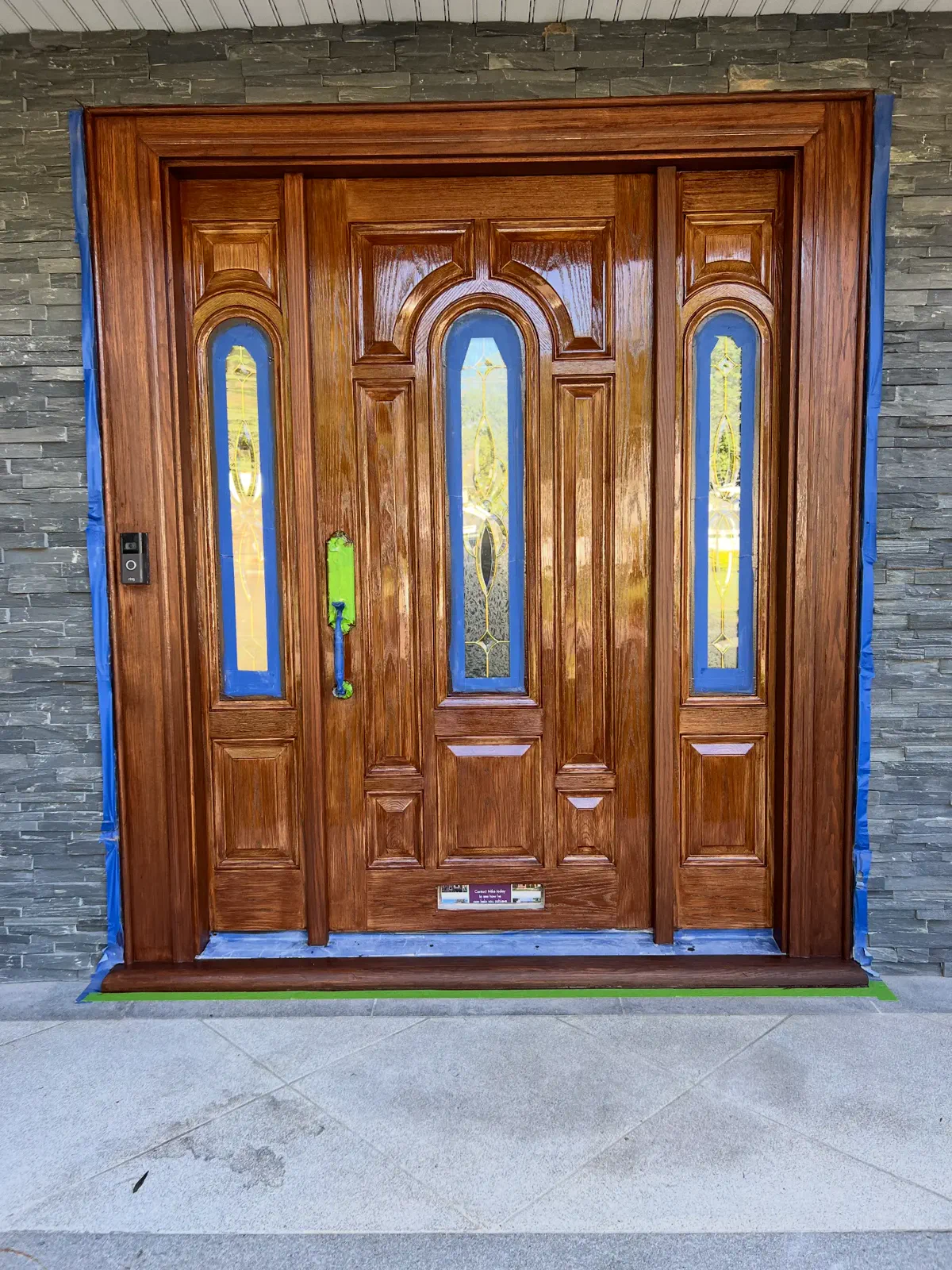
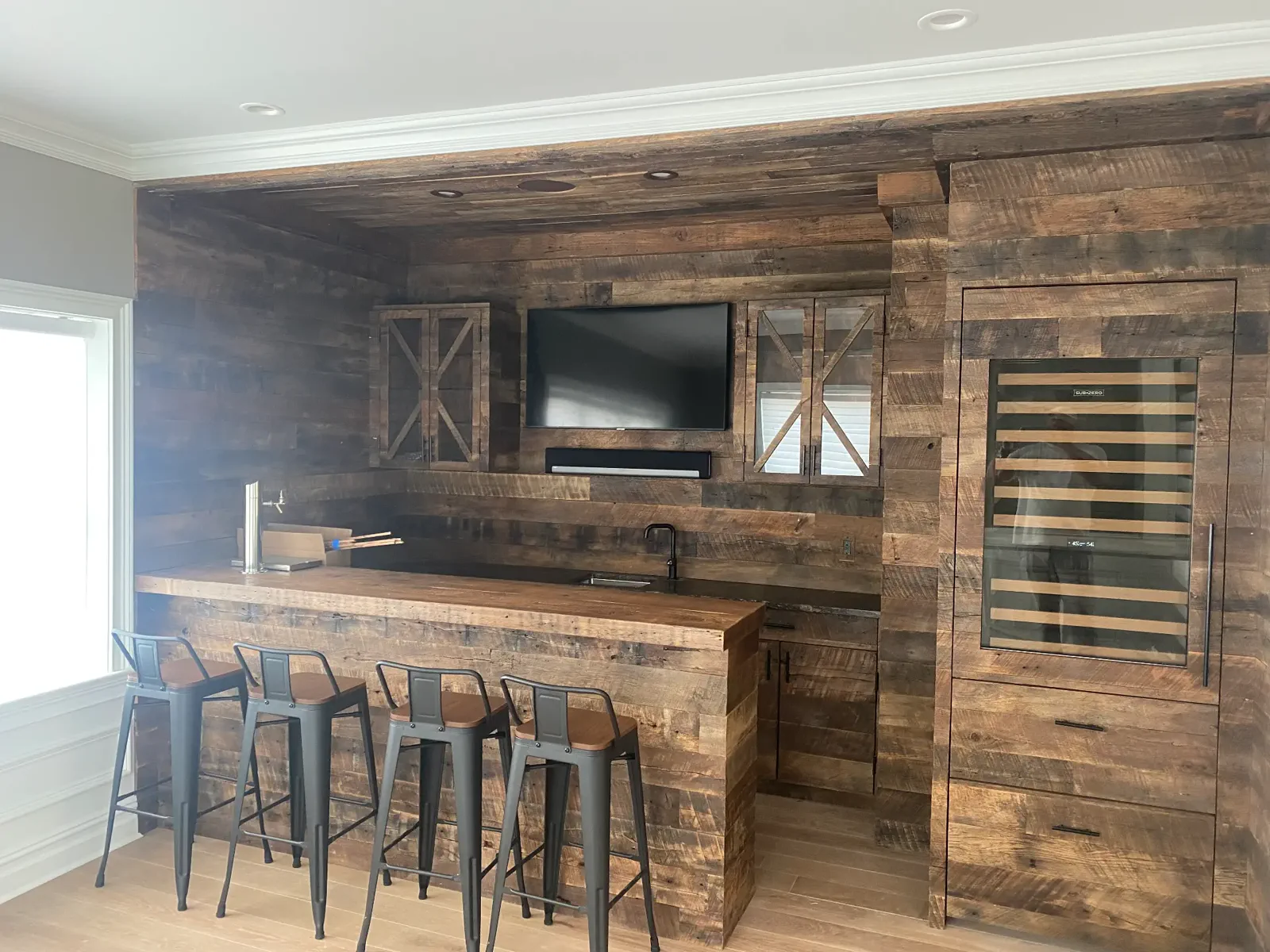
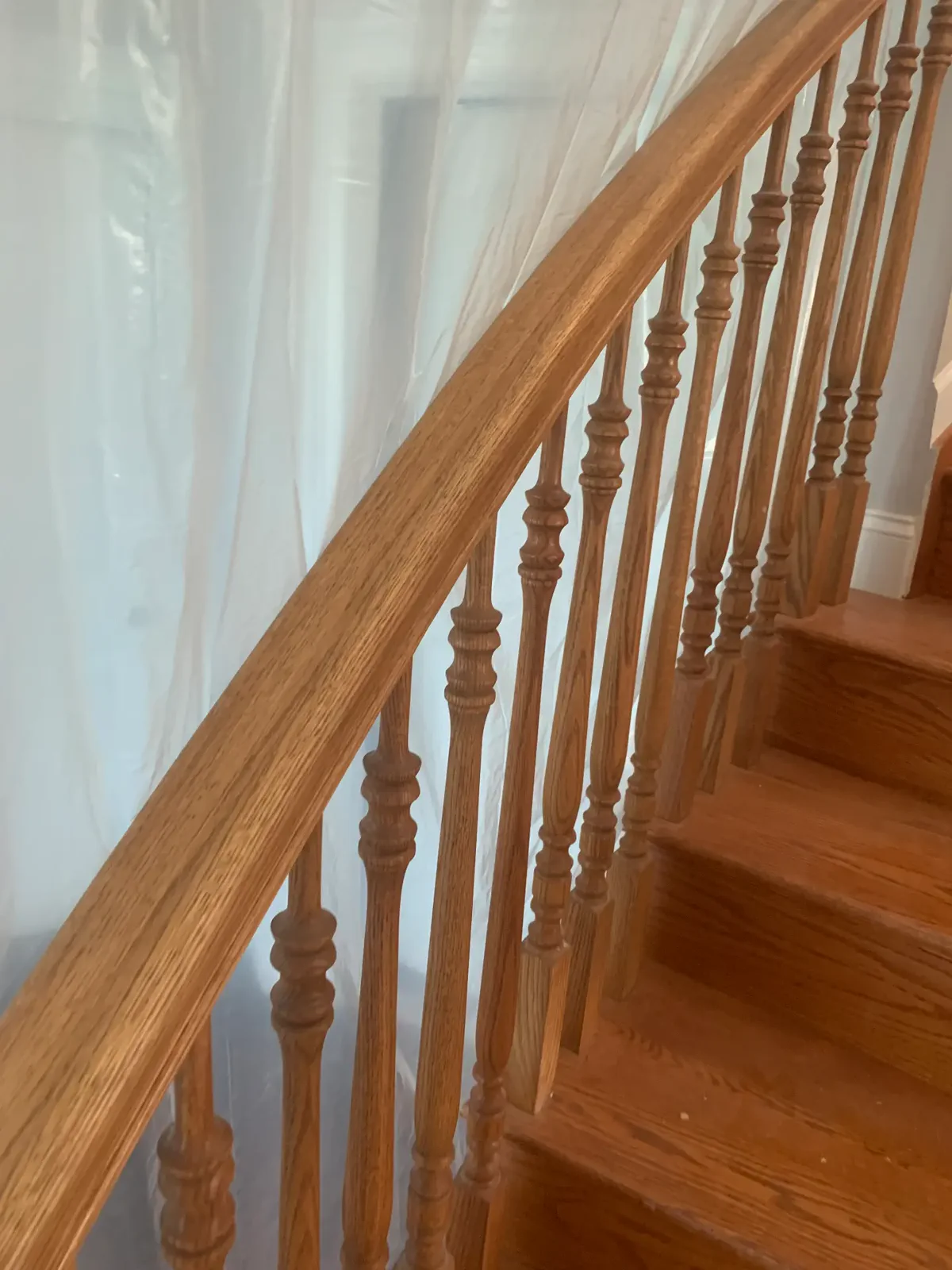
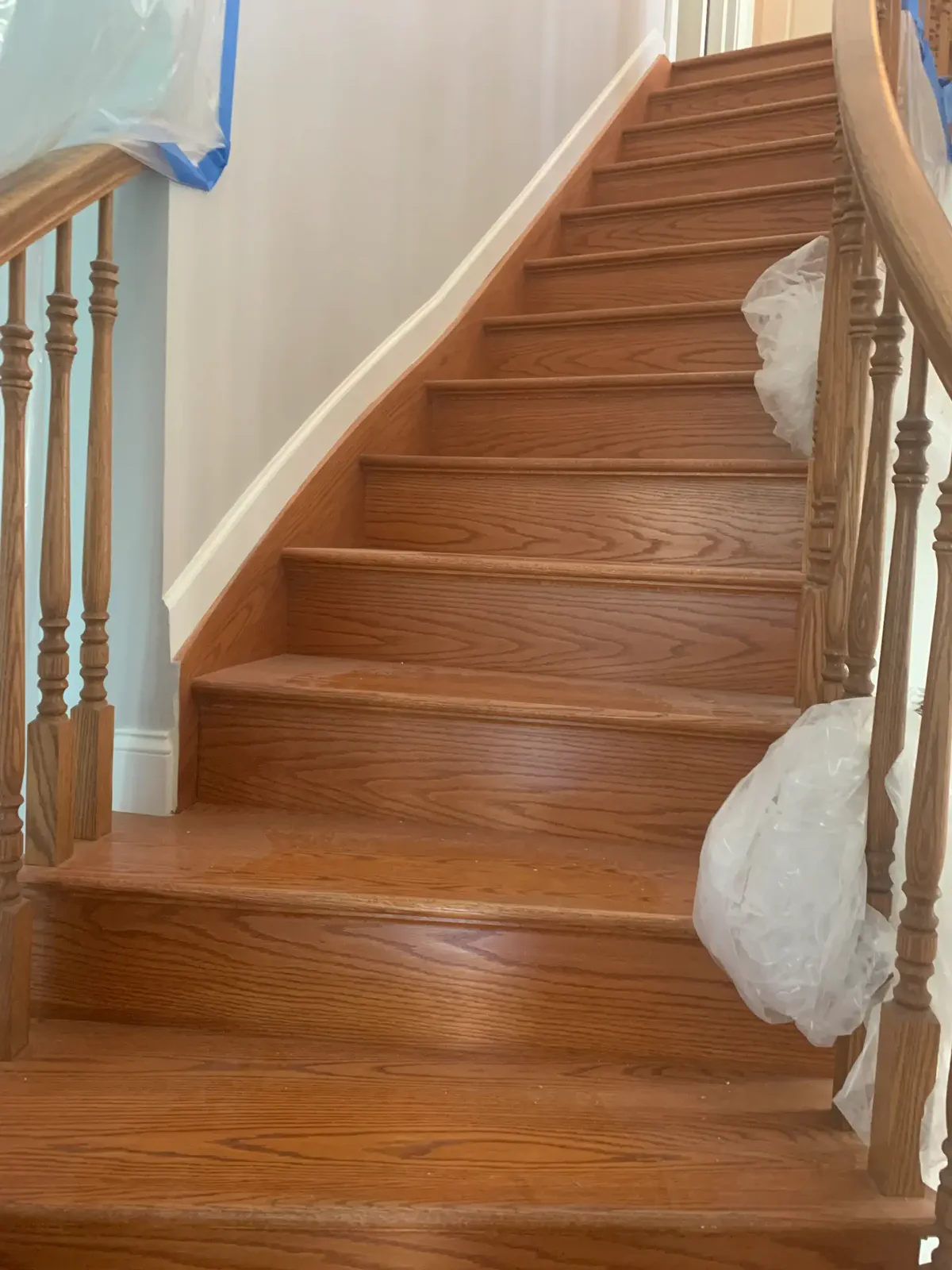
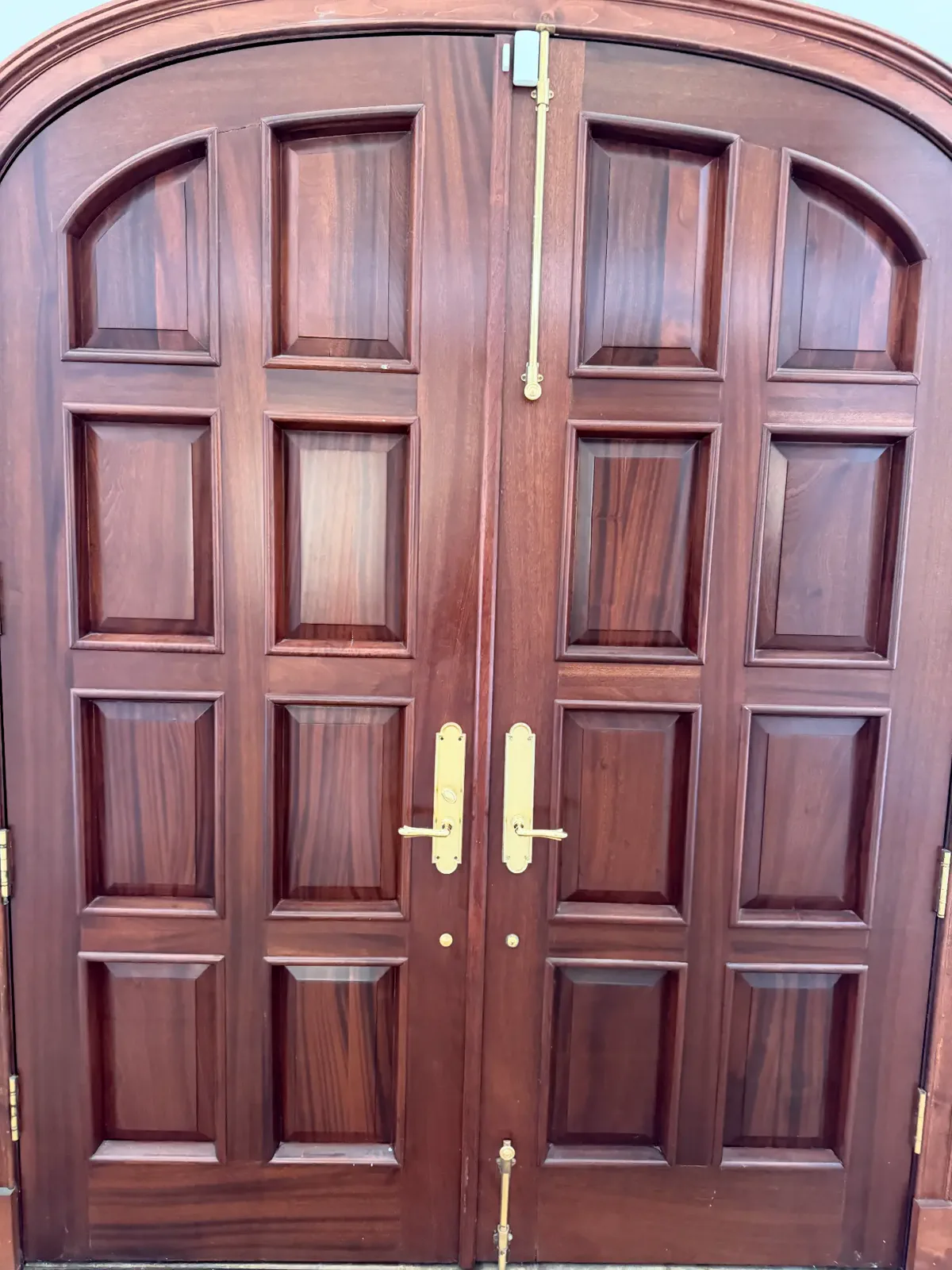
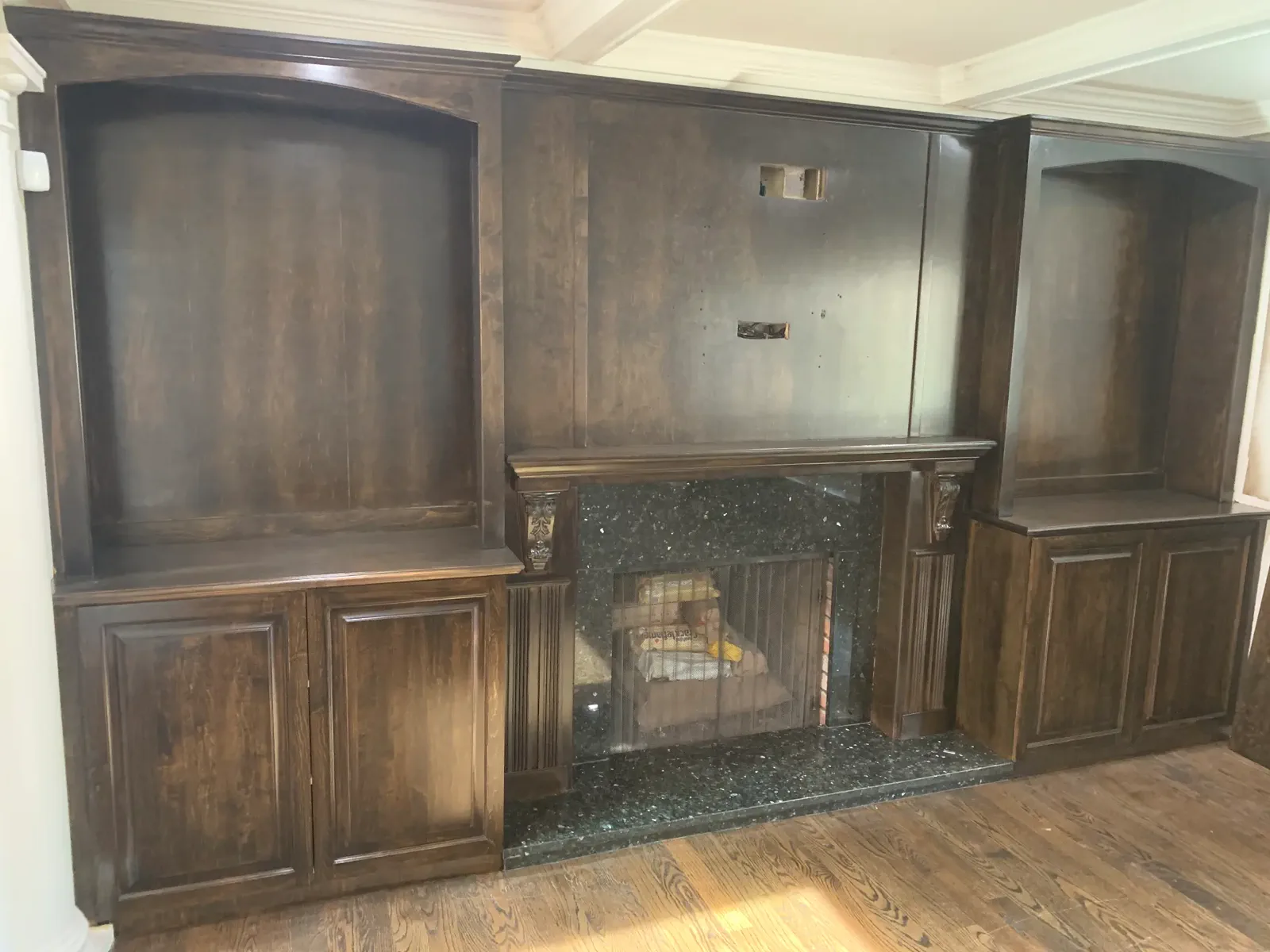
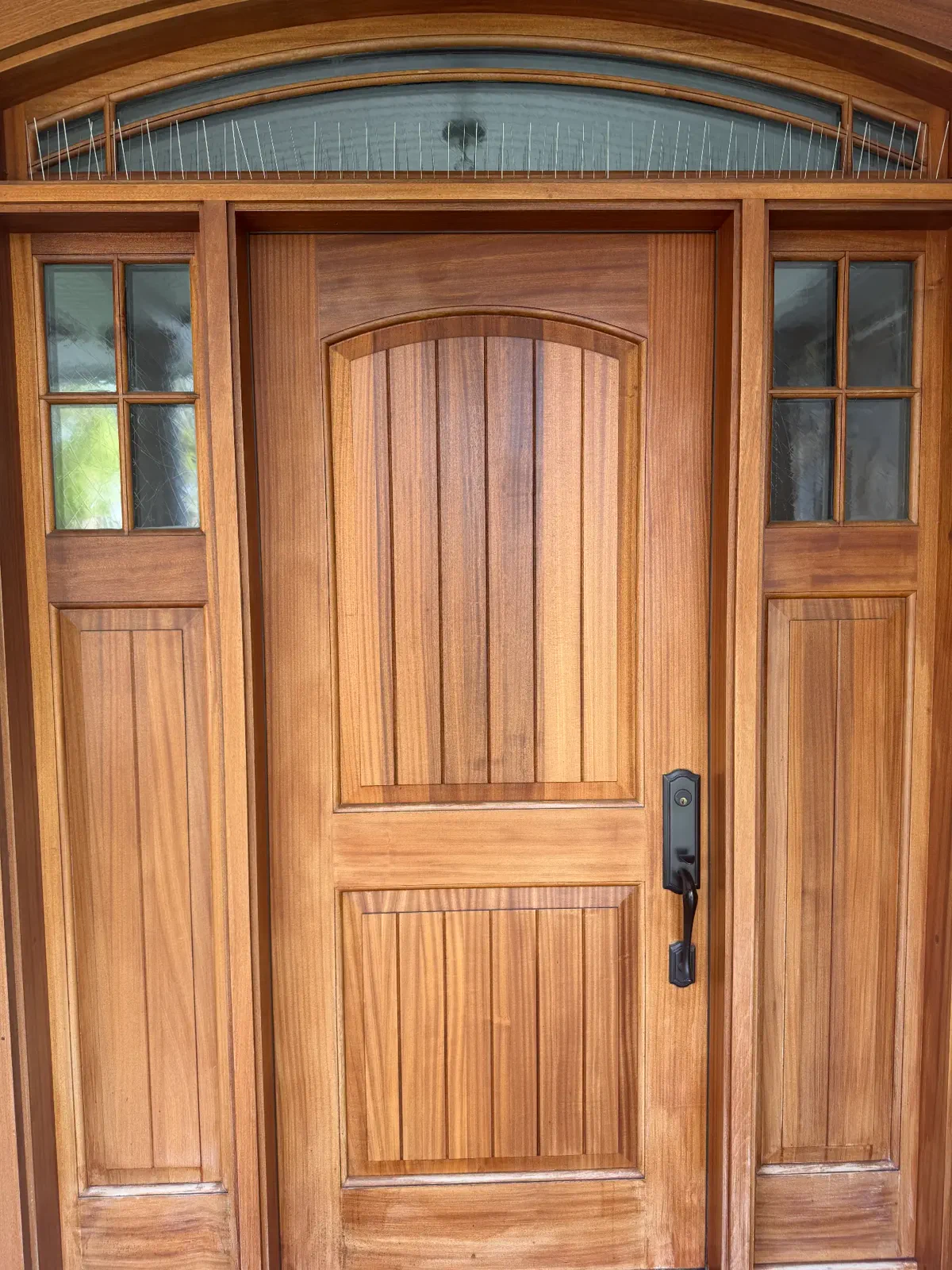
Interior wood: doors, railings and built-ins
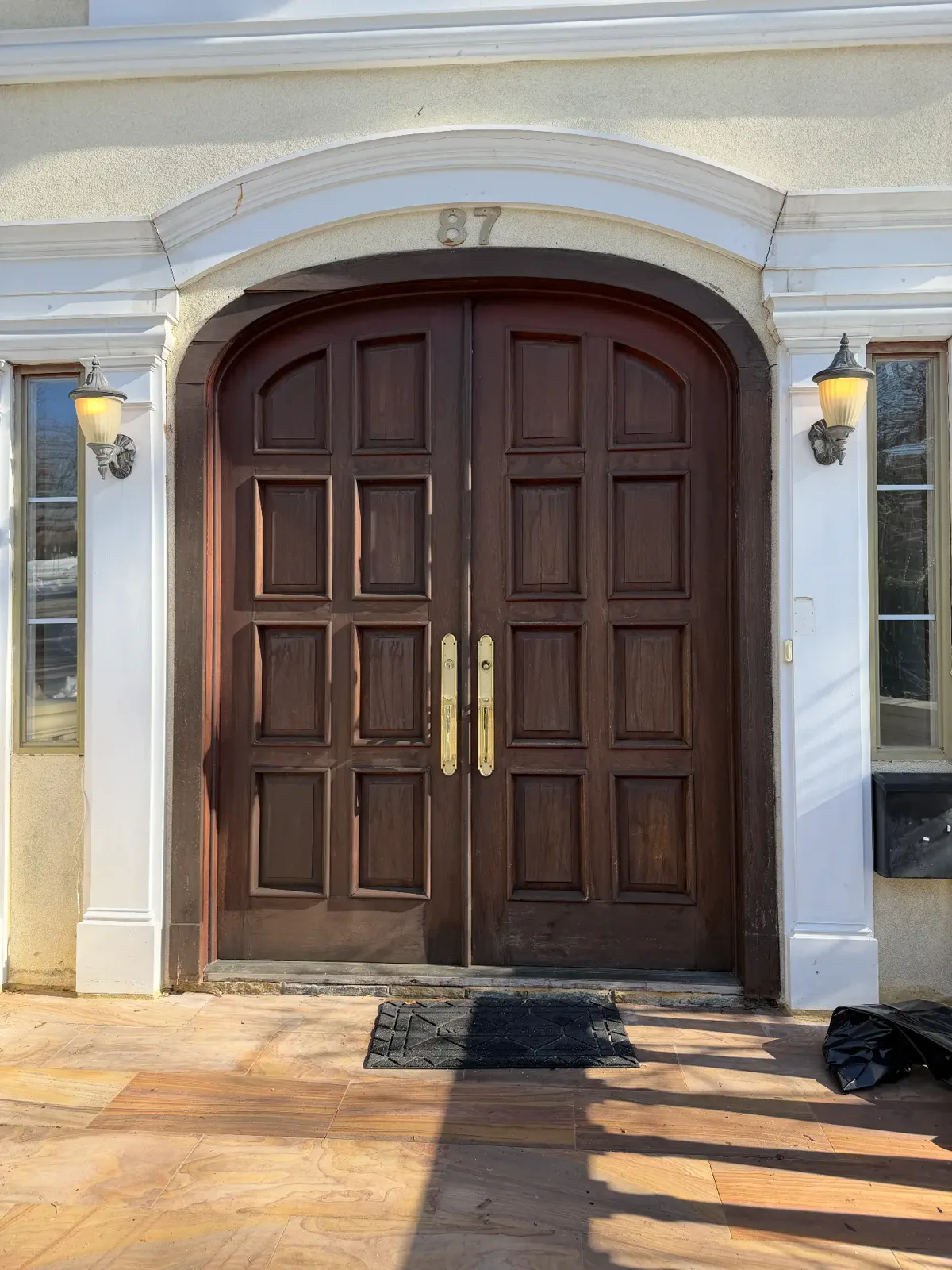
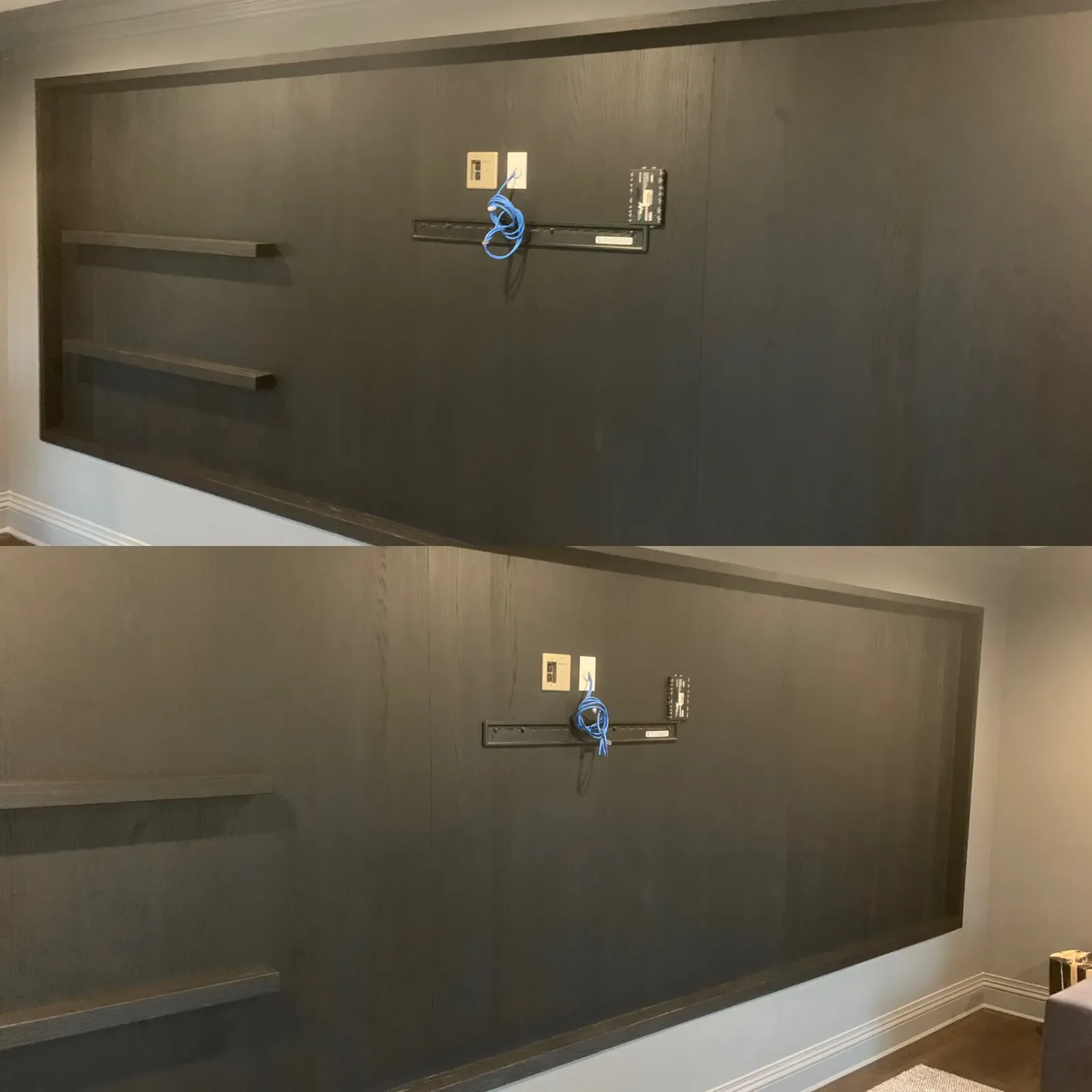
Stair systems, paneling, built-in shelving, ceilings and beams each take a stain differently — vertical runs, overhead planes and long flat surfaces all need their own approach. Where the wood will be touched daily we build a clear topcoat over the stain so the color is protected rather than left bare.
Exterior timber and decks
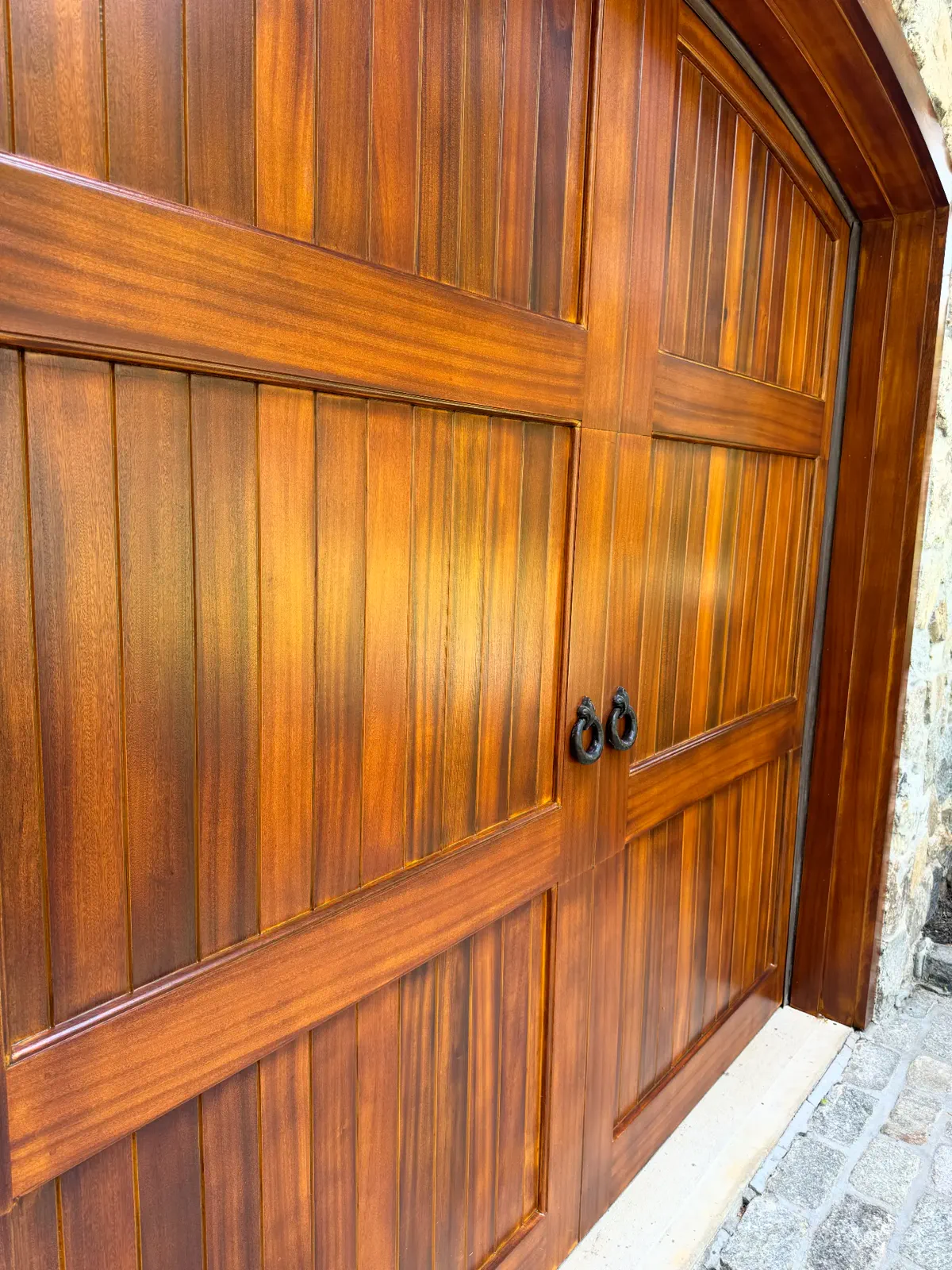
Outdoor wood in our region deals with sun, salt air and freeze-thaw cycles, so the finish has to breathe and be renewable. We specify solid or semi-transparent stains by exposure, and tell you honestly which will hold longest on your deck, railings or shingle elevations and what they will need next year.
Where we have worked
Wood Staining has been completed across Long Island — Nassau County and Suffolk County, including the Hamptons and the East End — plus New York City and Westchester County.
Questions
Frequently asked
- Can you match an existing stain?
- Often yes — we mix and test on your own wood or a hidden area until the color reads right in your light. Where an exact match is not possible we say so before the job and recommend coating the whole surface rather than leaving a seam.
- Should a deck be stained or painted?
- It depends on the wood and the exposure. Stain shows the grain and renewals are simple; paint lasts longer on some elevations. We give you the honest answer for your deck rather than the easier sale.
- Do you stain interior doors and railings in place?
- Yes, and loose pieces go to the bench whenever the schedule allows. Stair systems are sequenced so treads, risers, posts and spindles are not disturbed while they cure.
- How often does exterior stained wood need renewing?
- Usually sooner on south- and water-facing elevations. Sun and moisture decide it more than the calendar does; we note what your exposure will need when we quote.
Free estimate
Ready for a wood staining estimate?
Send the scope or book a walkthrough — every project is priced clearly and in writing, with the full scope and schedule spelled out.