
Trim & millwork
Trim & Millwork Finishing
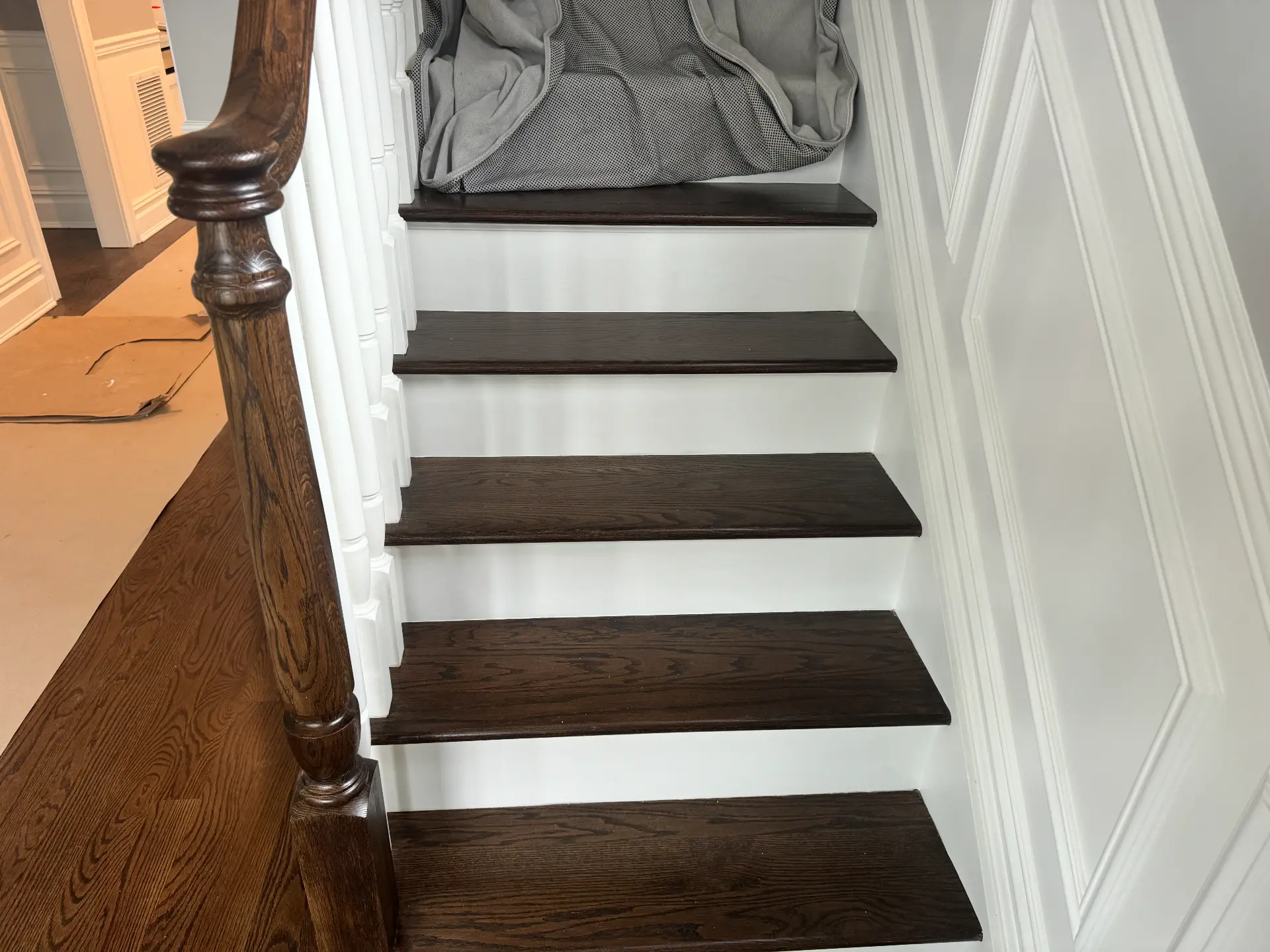
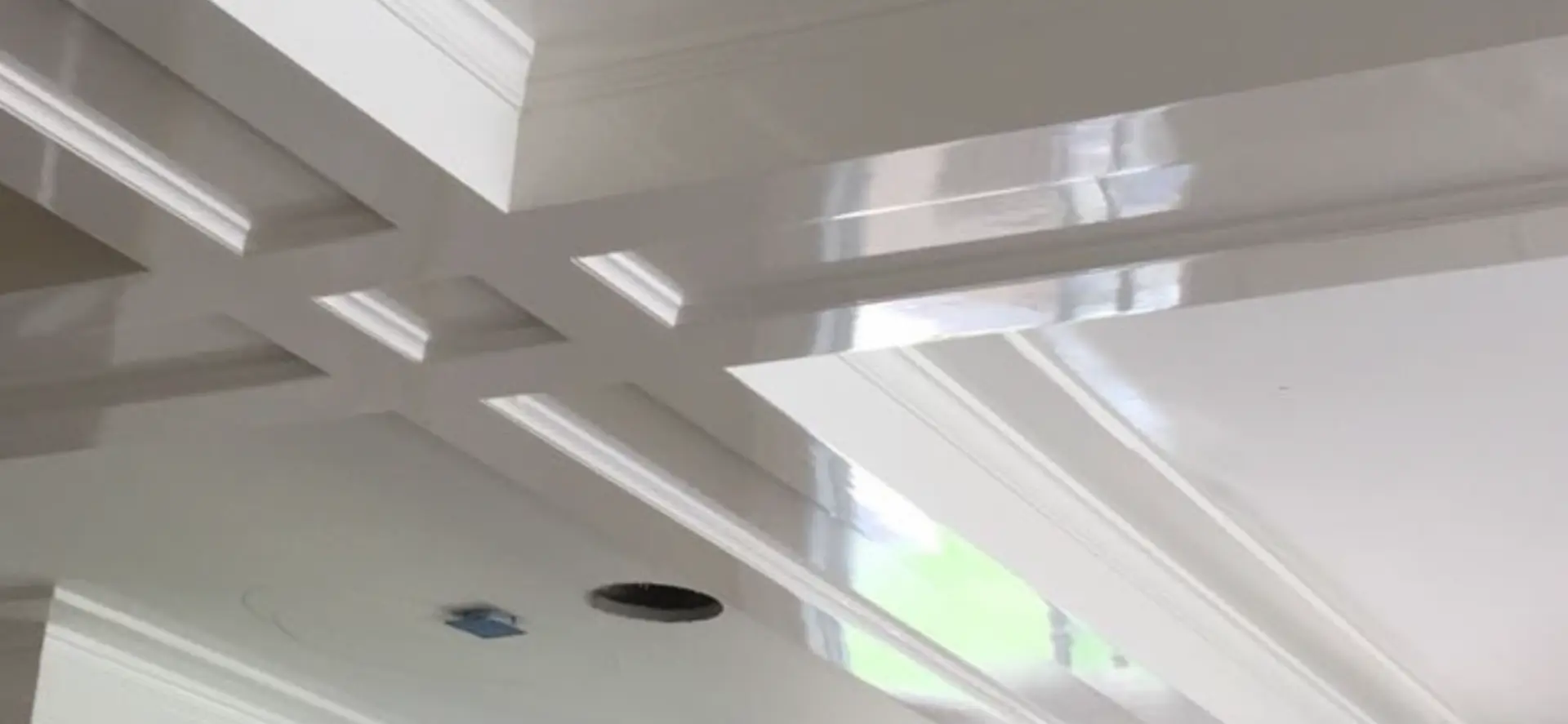
Trim is the part of a room you see from eighteen inches away, in daylight, for years. We spray it, with the same sequence every time: repair, sand, prime, sand again, then a sprayed topcoat hand-finished as it goes.
The sequence behind a crisp line
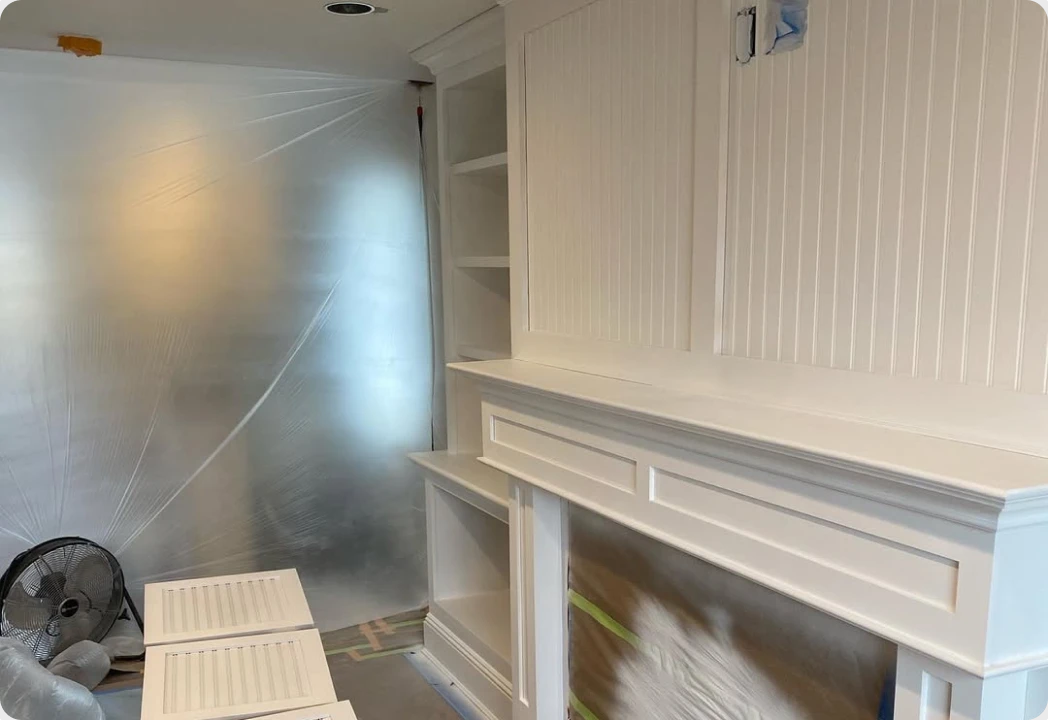
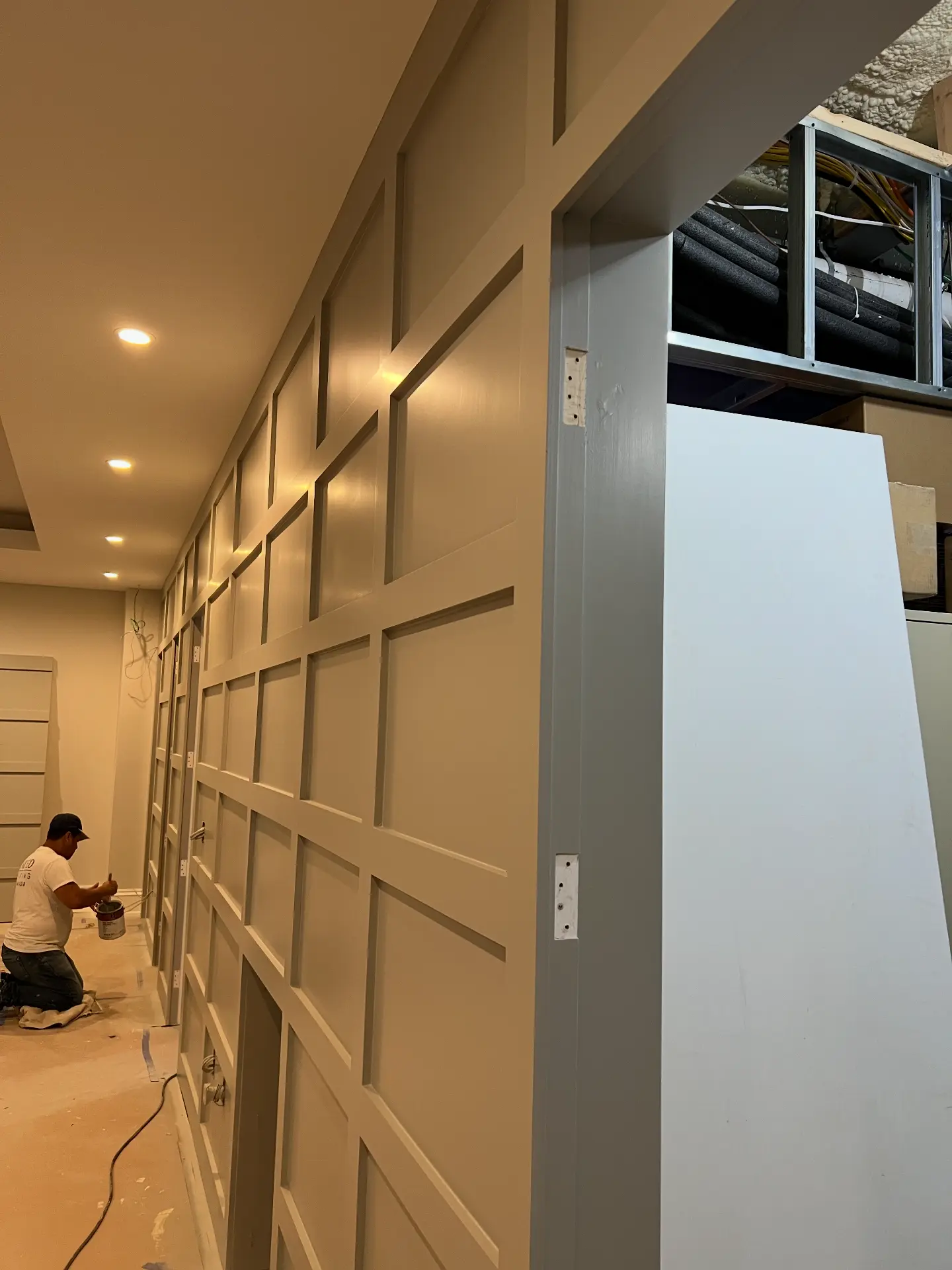
Installed millwork gets filled at the nail holes and joints, caulked where it meets drywall, sanded smooth, spot primed, then sprayed. Doors and loose pieces are sprayed flat on a bench where the coating can level out; work left in place is sprayed and then back-brushed by hand with the sheen kept wet long enough to flow flat. Both routes take longer than a wall repaint — that time is what removes brush marks and lap lines.
- Fill, caulk and sand of joints, nail holes and splices
- Spot priming so patches do not flash through the topcoat
- Doors and loose pieces sprayed flat on a bench wherever the schedule allows
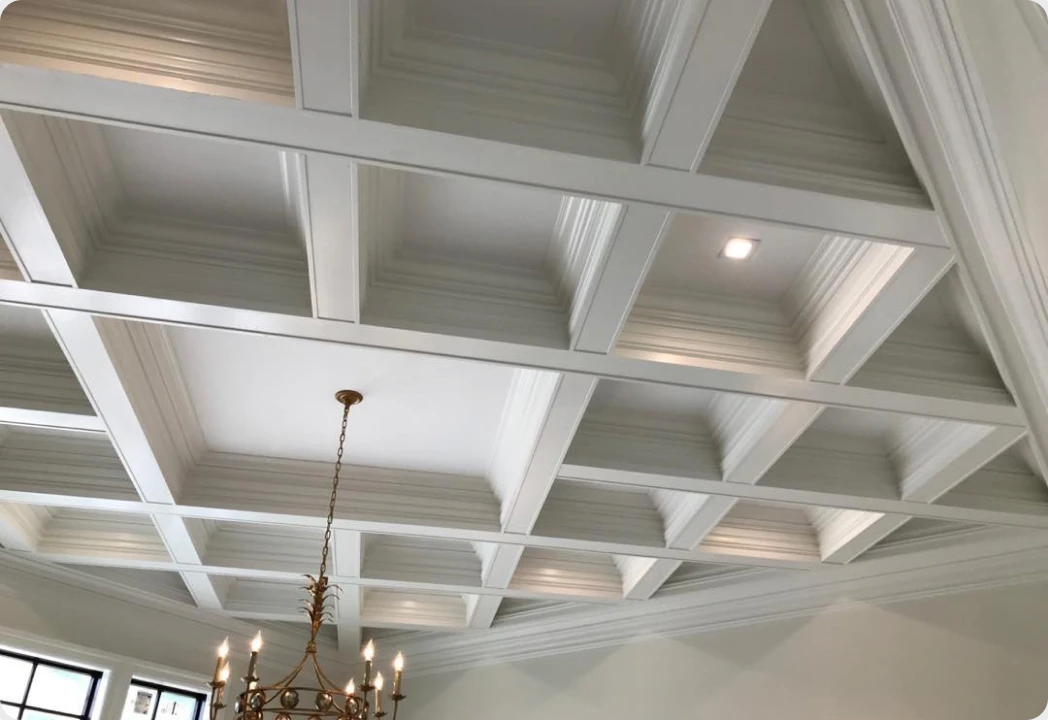
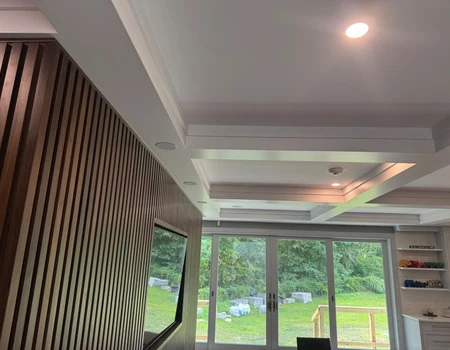
- Crown, casing, base and shelving sprayed in place, then back-brushed by hand
- Masked floors and walls so the line stays sharp
Sheens, colors and profiles
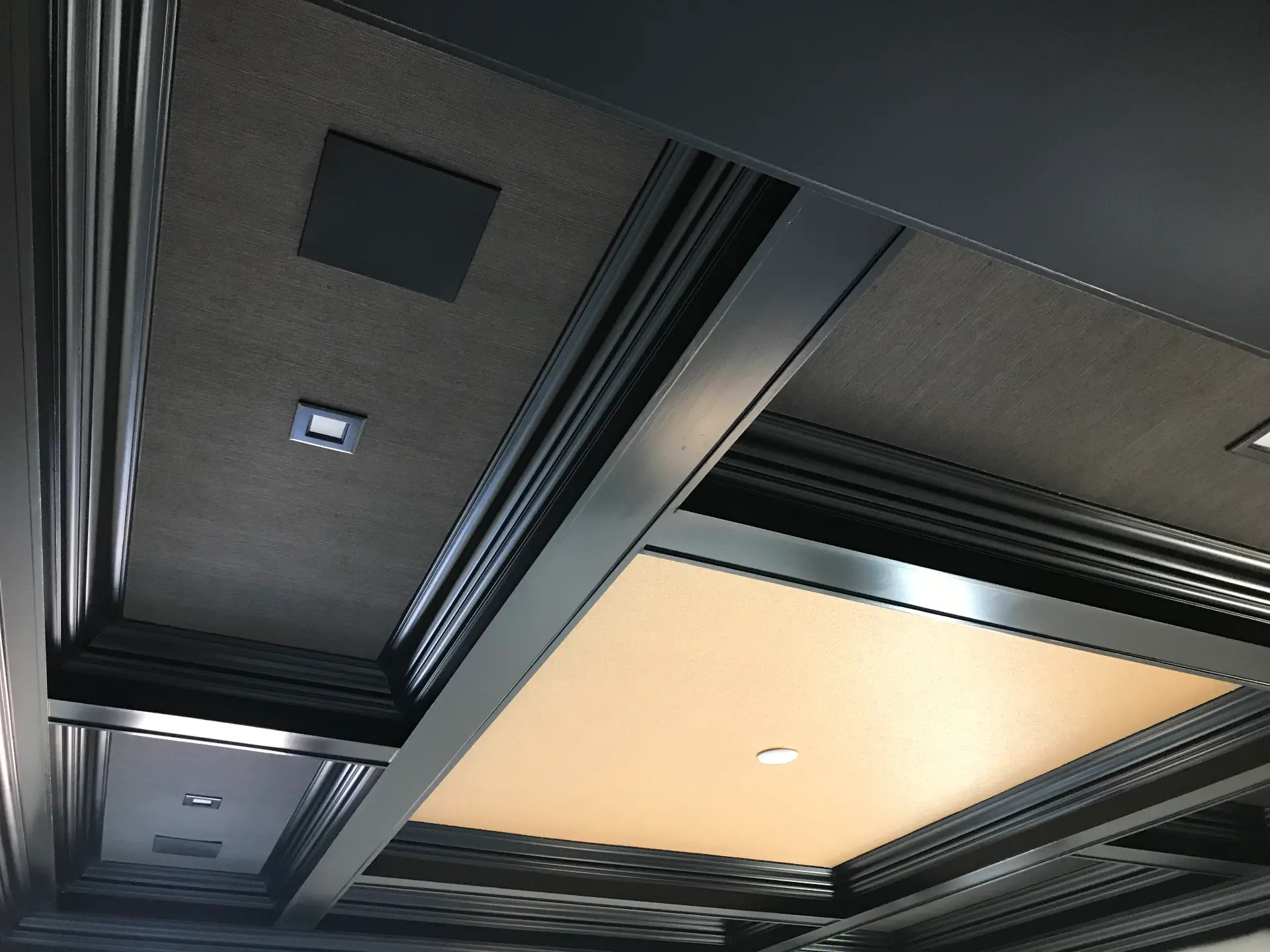
We match the sheen to how the trim will be used: satin or semi-gloss on base and doors that get wiped down, a flatter sheen where a builder or designer wants the woodwork to recede. When trim and walls share a color, the difference in sheen is the only thing separating them — so the surface underneath has to be flawless.
Working around installed millwork
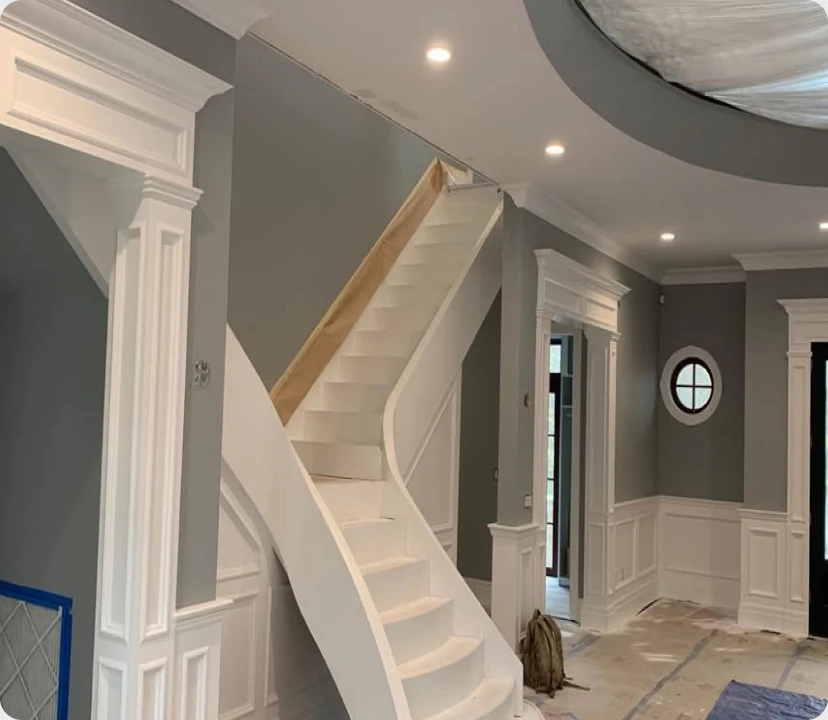
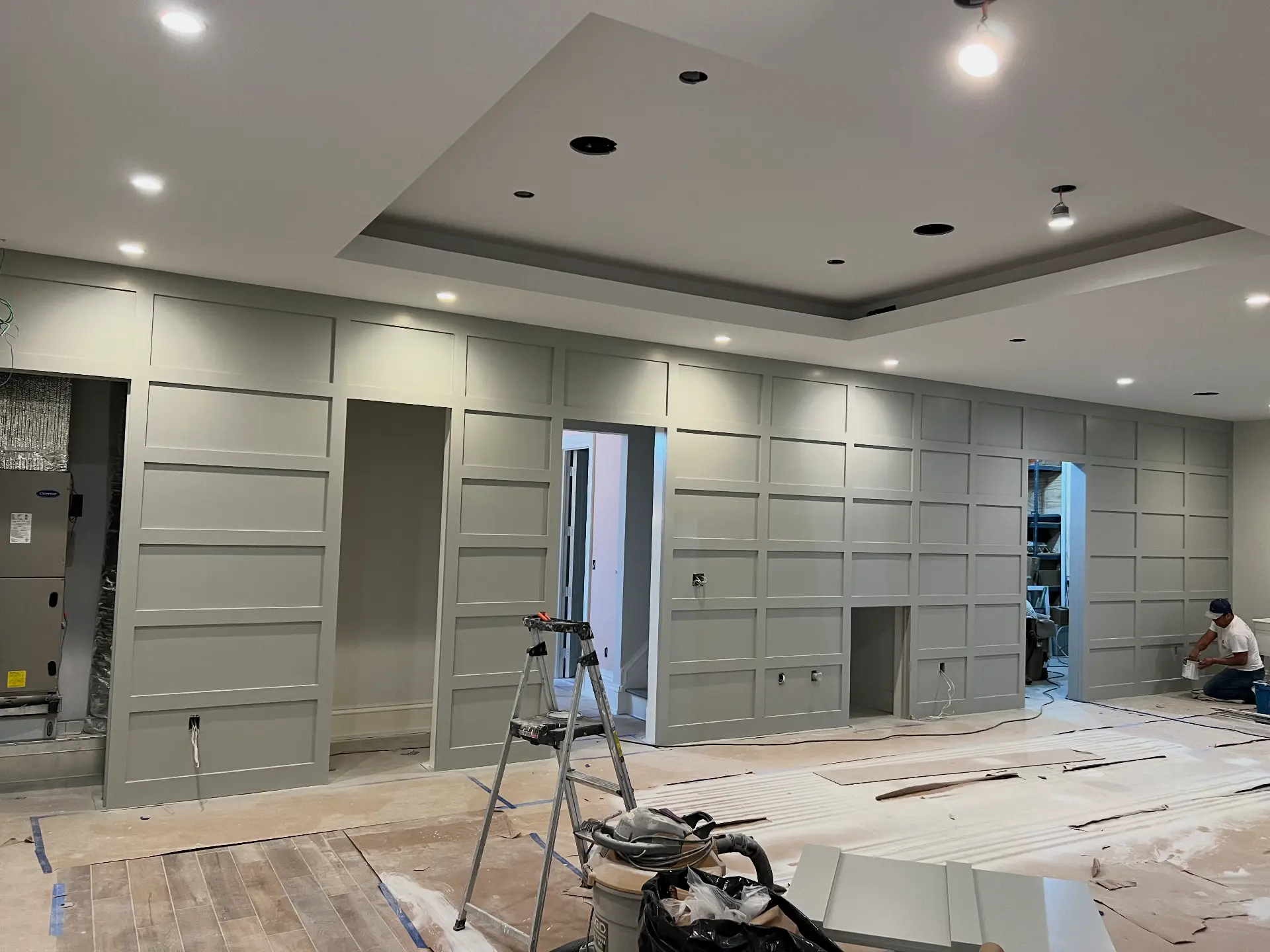
In occupied homes and on active job sites we work one area at a time, keep hardware and hinges labeled, and leave the house usable at the end of every day. On new construction we sequence millwork finishing to follow the drywall and flooring trades rather than fight them for the same rooms.
Where we have worked
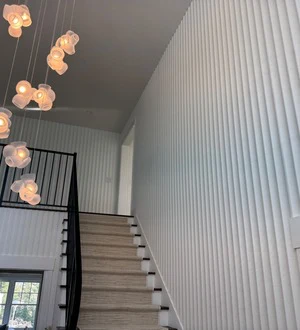
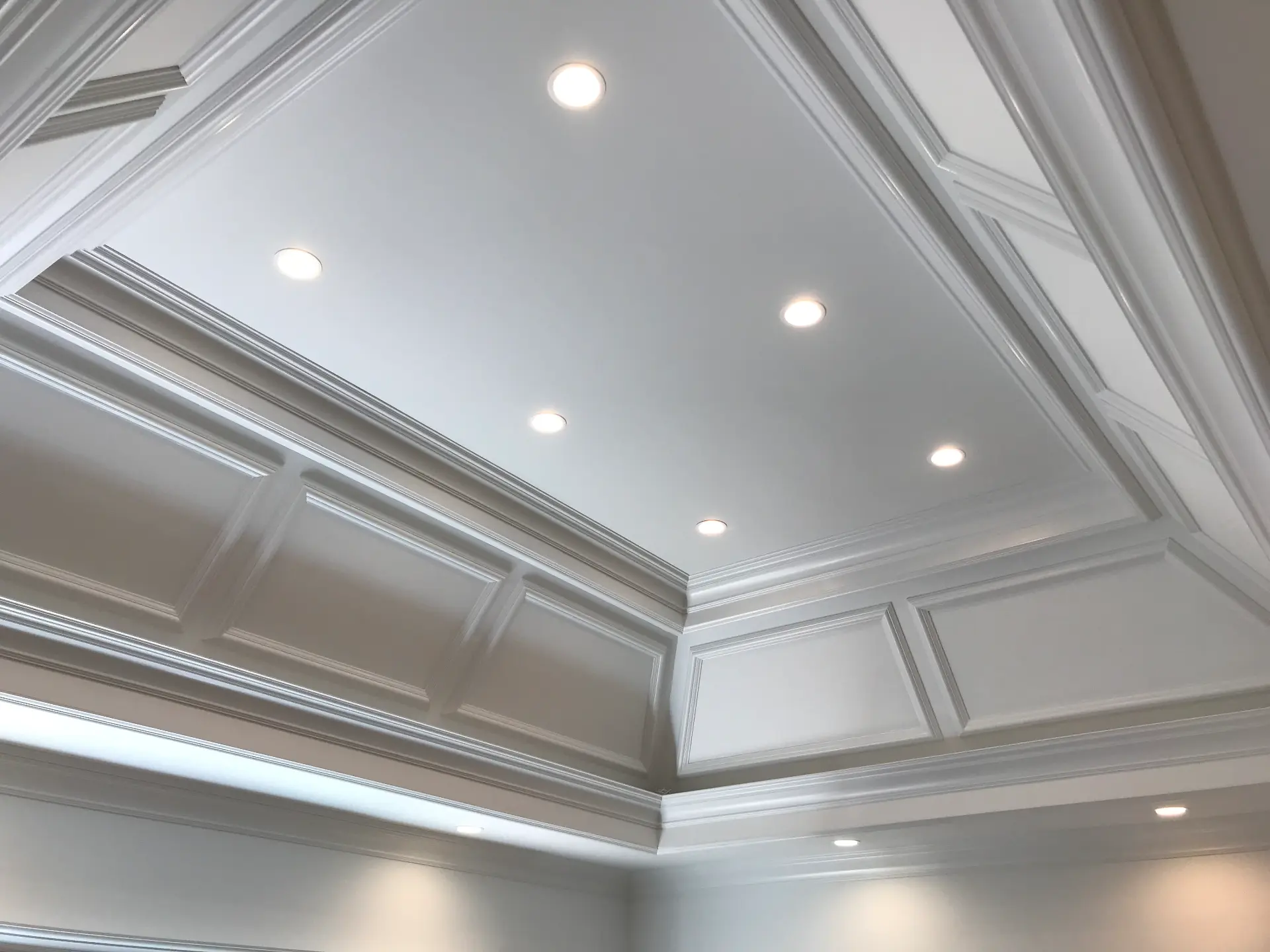
Trim & Millwork has been completed across Long Island — Nassau County and Suffolk County, including the Hamptons and the East End — plus New York City and Westchester County.
Questions
Frequently asked
- Do you take doors off to finish them?
- Whenever the schedule allows, yes — doors and loose millwork come off, get labeled and are sprayed flat on a bench, which comes out smoother than anything done in place. Hinges, hardware and closers are removed, labeled and reinstalled.
- Can you paint newly installed trim before the flooring goes in?
- Yes, and it is usually the better sequence. We prime and coat the millwork, then return for final touch-up after flooring and cabinetry are done.
- What sheen should trim be?
- Satin or semi-gloss on base, doors and bath trim that gets cleaned often; a flatter sheen where the design calls for the woodwork to sit back. We confirm the choice with sample areas.
- Do you repair damaged or rotted trim?
- Yes — filling, splicing and patching are part of prep, and we coordinate carpentry when a section needs replacement rather than repair.
- Do you spray trim and millwork?
- Yes. Trim, doors and millwork are sprayed for a smooth, level film, then back-brushed by hand as the coating goes on. Doors and loose pieces are sprayed flat on a bench; fixed work is sprayed in place with floors, walls and hardware masked.
Free estimate
Ready for a trim & millwork estimate?
Send the scope or book a walkthrough — every project is priced clearly and in writing, with the full scope and schedule spelled out.